



A third party workers comp claim may matter when an outside person or company contributed to your workplace injury. You may also have workers compensation benefits, but each claim has different rules, evidence, damages, and deadlines.
Contact Hinden & Breslavsky for a free consultation
California workers compensation generally provides benefits without requiring proof that your employer was negligent. A separate civil claim may apply when an outside party caused or contributed to the incident. The two matters involve different rules, damages, evidence, and deadlines.
This guide explains how these claims can overlap, which outside parties may be involved, what evidence to preserve, and why early coordination matters. It provides general information, not legal advice for a specific accident.
What Is a Third Party Workers Comp Claim in California?
A third party workers comp claim may allow an injured California worker to seek civil damages from a person or business other than the employer or a coworker. The worker may also pursue workers compensation benefits, but the separate claims must be evaluated and coordinated.
Workers compensation generally covers an injury that arises out of and occurs in the course of employment. Benefits may include medical treatment, temporary disability, permanent disability, and other statutory benefits. The California Department of Industrial Relations explains the basic system in its workers compensation FAQ.
A third-party case asks a different question. It examines whether an outside person or entity acted negligently, supplied a defective product, controlled dangerous property, or otherwise caused the injury under a recognized legal theory. The evidence must connect that outside conduct to the harm.
For example, a delivery worker injured by another driver may have a claim against that driver. A construction worker hurt by a separate subcontractor’s unsafe work may have a claim against that company. A machine injury may require investigation into a manufacturer, distributor, maintenance vendor, or other business.
California Labor Code section 3852 states that a workers compensation claim does not affect an injured employee’s claim for damages against another person. That rule does not guarantee a recovery. It means a worker should not assume that filing for workers compensation automatically eliminates a claim against a legally separate party.
The distinction matters because the remedies may differ. Workers compensation generally does not provide damages for pain and suffering. A successful third-party personal injury claim may allow different damages, depending on the facts and applicable law. A settlement may also involve reimbursement or lien rights for benefits already paid.
Who Can Be a Responsible Third Party?
The responsible party is not always obvious after a workplace accident. Employers, insurers, contractors, property owners, product companies, and drivers may describe the event differently. Identify every person and business connected to the accident before records disappear.
Another driver or transportation company
Motor vehicle accidents are a common source of potential third-party claims. A delivery worker, traveling employee, or person moving between job sites may be injured when another driver causes a crash. The other driver’s employer, vehicle owner, maintenance provider, or commercial carrier may also require investigation.
Do not assume that a company is responsible merely because its vehicle was nearby. The driver’s employment relationship, vehicle ownership, insurance coverage, route, and conduct all matter. Request or preserve the collision report, photographs, witness details, vehicle information, and available video.
A manufacturer, distributor, or maintenance company
A defective tool, machine, vehicle, or safety component may support a product liability investigation. Potentially relevant parties can include the manufacturer, distributor, seller, rental company, and maintenance vendor. The exact theory depends on the product, its condition, warnings, instructions, inspection history, and use.
Keep the equipment in its post-incident condition when possible. Do not discard, repair, clean, modify, or return it without understanding the evidence issue. Preserve its make, model, serial number, purchase or rental records, inspection documents, and maintenance history.
Our article on an unsafe equipment injury at work in California provides related guidance on safety, medical care, reporting, and documentation.
A property owner, contractor, or subcontractor
A property owner or manager may be relevant when a dangerous condition on premises contributed to the injury. Examples may include an unsafe walkway, inadequate lighting, an unprotected opening, or another condition the party knew or should have addressed.
Construction sites may involve several businesses with separate duties. A general contractor, subcontractor, property owner, equipment supplier, or temporary staffing company may have information about the work area and the accident. Contracts, site rules, inspection logs, safety meetings, and photographs can help establish who controlled the condition.
For a construction-specific discussion, review our guide to a construction accident third-party claim in California. The parties and duties in your accident may be different.
What Evidence Should You Preserve After the Injury?
Evidence can change quickly after a workplace accident. Equipment may be repaired, a work area may be cleaned, video may be overwritten, and witnesses may forget details. Preserve information lawfully and safely while following your medical provider’s instructions.
Record the event and identify witnesses
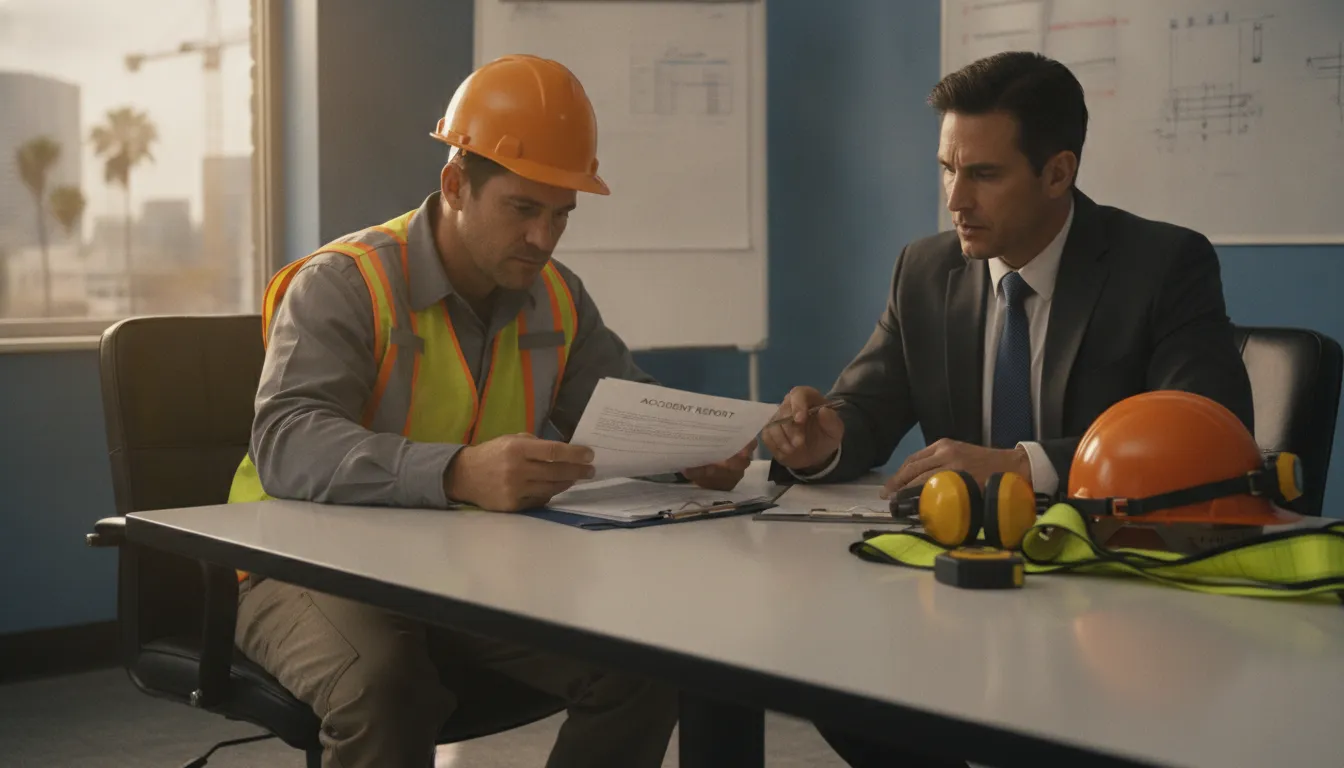
Write down the date, time, location, task, equipment, weather, lighting, and sequence of events. Describe what happened in your own words. Record who assigned the work and who was present. Keep a copy of any incident report you submit or sign. Ask for corrections if the report does not accurately describe the event.
List coworkers, supervisors, drivers, customers, contractors, vendors, and bystanders who may have seen the accident or the conditions before it. Record contact information if you can do so lawfully. Do not pressure witnesses or ask them to change their accounts.
Preserve physical, digital, and medical records
Take photographs of the work area, damaged equipment, vehicles, warning signs, flooring, lighting, and visible injuries when it is safe. Keep the original files. Note the date and time of each photograph. Do not apply filters or alter the originals.
Save texts, emails, app messages, work instructions, schedules, safety complaints, and communications with the employer, staffing agency, contractor, vendor, or insurer. Keep a dated log of calls. Include the person’s name, company, topic, and any documents requested or exchanged.
Keep medical records, work restrictions, bills, mileage information, and wage records. Tell medical providers how the injury happened and where it occurred. Avoid guessing about fault. Accurate, consistent descriptions can help an attorney compare the medical evidence with the accident evidence.
Preserve evidence without creating new risks
Do not enter a dangerous area to take a photograph. Do not interfere with an investigation or remove equipment from a worksite without permission. Do not post speculation or confidential claim information online. Keep potentially relevant posts, messages, photographs, and files rather than deleting them.
How Does a Third Party Workers Comp Claim Work With Benefits?
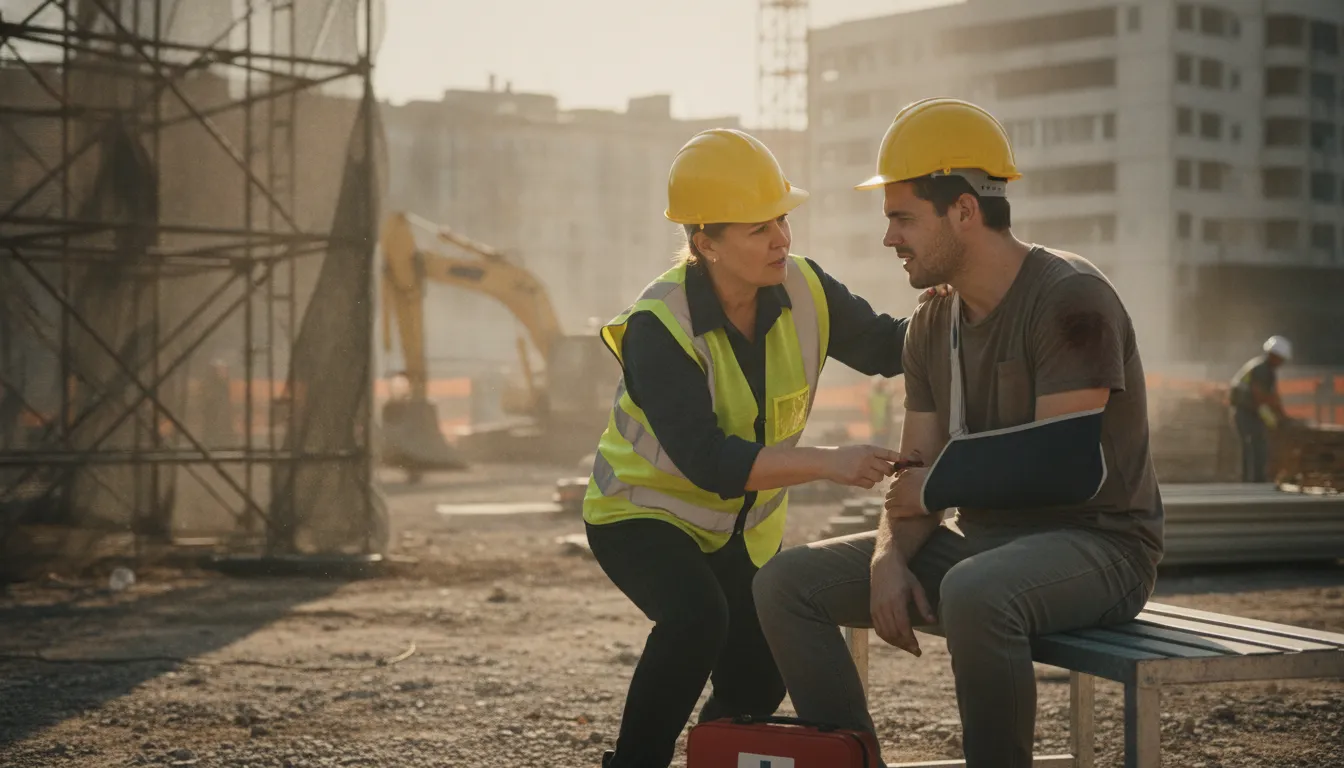
Workers compensation and a third-party case may proceed at the same time, but they do not have identical requirements. Workers compensation generally focuses on whether the injury is work-related. The civil case focuses on whether an outside party is legally responsible and what damages the law allows.
| Issue | Workers compensation | Third-party claim |
|---|---|---|
| Potential defendant | The employer’s workers compensation system provides benefits for a qualifying work injury. | A separate person or business may be responsible for causing the injury. |
| Fault | Benefits generally do not require proof that the employer caused the accident. | The claim usually requires proof of negligence, a defect, or another legal basis. |
| Potential recovery | Benefits may include medical care and disability payments under California law. | Depending on the facts, damages may include losses not covered by workers compensation. |
| Coordination | The employer or carrier may have reimbursement or subrogation rights. | A settlement may need to account for benefits already paid and related rights. |
Why does reimbursement matter?
When workers compensation benefits have been paid, the employer or carrier may have rights connected to a third-party recovery. California Labor Code section 3860 addresses aspects of settlement, notice, and recovery involving the employer, carrier, employee, and third party. Review the official text of Labor Code section 3860.
This does not mean an injured worker loses the right to pursue a civil claim. It means settlement planning should account for all affected interests. Do not sign a release, accept a settlement, or agree to reimbursement terms before understanding how the decision affects both matters.
Tell each attorney, insurer, and claim handler that another related claim exists. Keep copies of notices and settlement communications. A workers compensation lawyer can coordinate with a personal injury attorney when separate representation is appropriate.
Contact Hinden & Breslavsky for a free consultation about your work injury
What Deadlines Apply to a California Third-Party Claim?
Deadlines depend on the claim, the defendant, the injury, and the facts surrounding discovery. California Code of Civil Procedure section 335.1 generally provides a two-year period for an action based on personal injury. Review the official statute at California Code of Civil Procedure section 335.1.
The general rule is not a deadline calculation for every case. A government entity, minor, person with a legal disability, delayed discovery issue, contractual relationship, or other fact may change the analysis. A claim against a public entity may involve an earlier administrative claim requirement.
Workers compensation deadlines are separate
Workers compensation has its own reporting and filing requirements. Notify your employer promptly, complete the required claim paperwork, and seek medical care. Reporting the injury and filing a claim are separate steps. The applicable timing can depend on the type of injury and when you knew or should have known about it.
Do not wait for the third-party deadline to approach. Evidence review, insurance investigation, expert evaluation, and proper service can take time. A missed deadline may limit an otherwise viable claim, while an early review gives counsel more time to identify responsible parties.
Our guide on when to hire a workers compensation lawyer explains circumstances that may justify prompt legal review, including disputes, delays, and complex injuries.
What Steps Should You Take to Protect Both Claims?
After a work injury, focus first on safety and medical care. Then organize the facts and records that may help counsel evaluate both the workers compensation matter and any outside-party claim.
- Report the injury promptly. Tell your employer what happened and request the workers compensation claim forms. Keep copies of everything you submit.
- Get appropriate medical care. Explain that the injury occurred at work. Follow medical instructions and keep treatment, restriction, and expense records.
- Preserve the accident scene and equipment. Photograph conditions when safe. Do not repair, discard, or modify relevant equipment before it can be evaluated.
- Identify outside parties. Consider drivers, contractors, property owners, product companies, maintenance vendors, and other businesses connected to the accident.
- Save communications. Keep claim letters, adjuster messages, work instructions, safety reports, photographs, videos, and witness information.
- Ask about every deadline. Confirm the workers compensation deadlines and any civil claim or government claim requirements. Do not rely on a general two-year rule.
- Review releases before signing. Understand whether a release affects the outside party claim, workers compensation benefits, or reimbursement rights.
- Request an early legal review. Bring claim documents, medical records, photographs, witness details, and insurance information to the consultation.
These steps do not establish liability by themselves. They help preserve the information needed for a fact-specific legal analysis.
Frequently Asked Questions
Can I pursue a third-party claim after filing workers compensation?
Potentially. A worker may pursue workers compensation and a separate civil claim when someone other than the employer or coworker caused the injury. The outside-party claim requires its own legal and factual analysis.
What damages may a third-party claim cover?
Depending on the facts, a third-party case may seek damages that workers compensation generally does not provide, including pain and suffering. No specific recovery is guaranteed, and the available damages depend on proof and applicable law.
Can the workers compensation carrier seek reimbursement?
Possibly. The employer or carrier may have rights related to benefits paid when a third party is legally responsible. California Labor Code section 3860 addresses parts of this process. Settlement terms should be reviewed before acceptance.
How long do I have to file a third-party lawsuit?
Many California personal injury claims have a general two-year limitations period, but exceptions and additional requirements may apply. The responsible party and claim type can change the deadline. Prompt review is important.
What should I bring to a legal consultation?
Bring accident reports, photographs, medical records, work restrictions, claim correspondence, insurance information, witness details, and any equipment or product records. A clear timeline can also help an attorney evaluate the potential claims.
Discuss Your California Work Injury
A possible outside-party claim can involve overlapping benefits, evidence preservation, insurance issues, and deadlines. Hinden & Breslavsky can review the facts, explain potential options, and identify questions requiring prompt attention. The review will depend on the details of your accident and does not guarantee an outcome.
Our firm has represented injured workers in California since 1974. We provide free consultations and serve clients in English, Spanish, Russian, Hebrew, and Farsi.