



Third Party Claim Workplace Injury California
A third party claim workplace injury California case may arise when someone other than the injured worker’s employer contributes to an on-the-job accident. The worker may pursue workers’ compensation benefits while also seeking civil damages from the responsible outside party, but the two claims must be carefully coordinated.
Contact Hinden & Breslavsky to discuss your workplace injury and available claims.
California workplace accidents can involve negligent drivers, property owners, equipment manufacturers, subcontractors, and other businesses. Identifying every responsible party matters because workers’ compensation and a civil lawsuit provide different remedies. Evidence, filing deadlines, insurance liens, and the employer’s right to reimbursement can also affect the injured worker’s recovery.
What Is a Third Party Claim Workplace Injury California Case?
A third-party workplace injury claim is a civil action against a person or entity other than the injured worker’s employer. Unlike workers’ compensation, which generally provides benefits without requiring proof of fault, a third-party action usually requires evidence that the outside party’s negligence, defective product, or other wrongful conduct caused the injury.
Workers’ compensation is generally the exclusive remedy for an injury arising out of and occurring in the course of employment. That rule ordinarily limits civil claims against the employer, subject to narrow statutory exceptions. It does not necessarily protect an unrelated party whose conduct caused or contributed to the accident.
California Labor Code section 3852 provides that a workers’ compensation claim does not affect an injured employee’s claim or right of action for damages against another person. In practical terms, an injured worker may have two distinct paths: a workers’ compensation proceeding and a civil claim against the third party.
Who May Qualify as a Third Party?
A third party may be an individual, corporation, property owner, contractor, subcontractor, product manufacturer, distributor, or another entity that is legally separate from the employer. The correct answer depends on employment relationships, contracts, control over the worksite, product records, and the conduct that led to the accident.
For example, a delivery employee struck by a negligent motorist may have a claim against that driver. An injured construction employee may have a claim against a separate contractor that created an unsafe condition. A worker injured by defective machinery may have a claim against parties in the product’s chain of distribution.
How Do Workers’ Compensation and Third-Party Claims Differ?
Workers’ compensation and third-party claims differ in fault requirements, available damages, procedure, and responsible defendants. Workers’ compensation generally provides limited statutory benefits regardless of fault. A civil third-party case requires proof of legal responsibility but may permit recovery for losses, including pain and suffering, that workers’ compensation does not provide.
The following comparison highlights the principal differences. Actual rights and recoverable amounts depend on the facts, applicable law, available insurance, and the effect of liens or credits.
| Issue | Workers’ Compensation Claim | Third-Party Civil Claim |
|---|---|---|
| Fault | Benefits generally do not depend on proving employer negligence. | The injured worker generally must establish the third party’s legal responsibility. |
| Responsible party | The employer’s workers’ compensation system and insurer. | An outside person or entity that caused or contributed to the injury. |
| Potential recovery | Authorized medical treatment, disability benefits, and other statutory benefits. | Economic damages and potentially noneconomic damages, subject to proof and law. |
| Pain and suffering | Not available as a workers’ compensation benefit. | May be recoverable in an appropriate civil case. |
| Forum | Workers’ Compensation Appeals Board process. | Civil court, unless resolved before litigation. |
| Coordination | Benefits may create reimbursement or credit issues. | Resolution may be affected by an employer or insurer lien. |
An injured employee does not automatically receive a double recovery by pursuing both claims. California law contains mechanisms that allow an employer or workers’ compensation insurer to seek reimbursement for certain benefits paid when a third party is responsible. A lawyer can evaluate the interaction before settlement decisions are made.
For guidance on the benefits process, consult a Los Angeles workers’ compensation attorney. For evaluation of fault and civil damages, a Los Angeles personal injury attorney can assess the third-party case.
Which Accidents May Support a Third-Party Claim?
An accident may support a third-party claim when an outside person’s conduct, an unsafe property condition, or a defective product contributes to an employee’s injury. Common examples include work-related vehicle collisions, multi-employer construction accidents, dangerous premises, defective machinery, and negligent services performed by vendors or contractors at the workplace.
Vehicle Collisions During Work
An employee driving for a work purpose may be covered by workers’ compensation after a collision. If another motorist caused the crash, the employee may also pursue that motorist and any other legally responsible party. Relevant evidence may include police reports, vehicle data, photographs, medical records, witness statements, and applicable commercial insurance policies.
Construction Sites With Multiple Companies
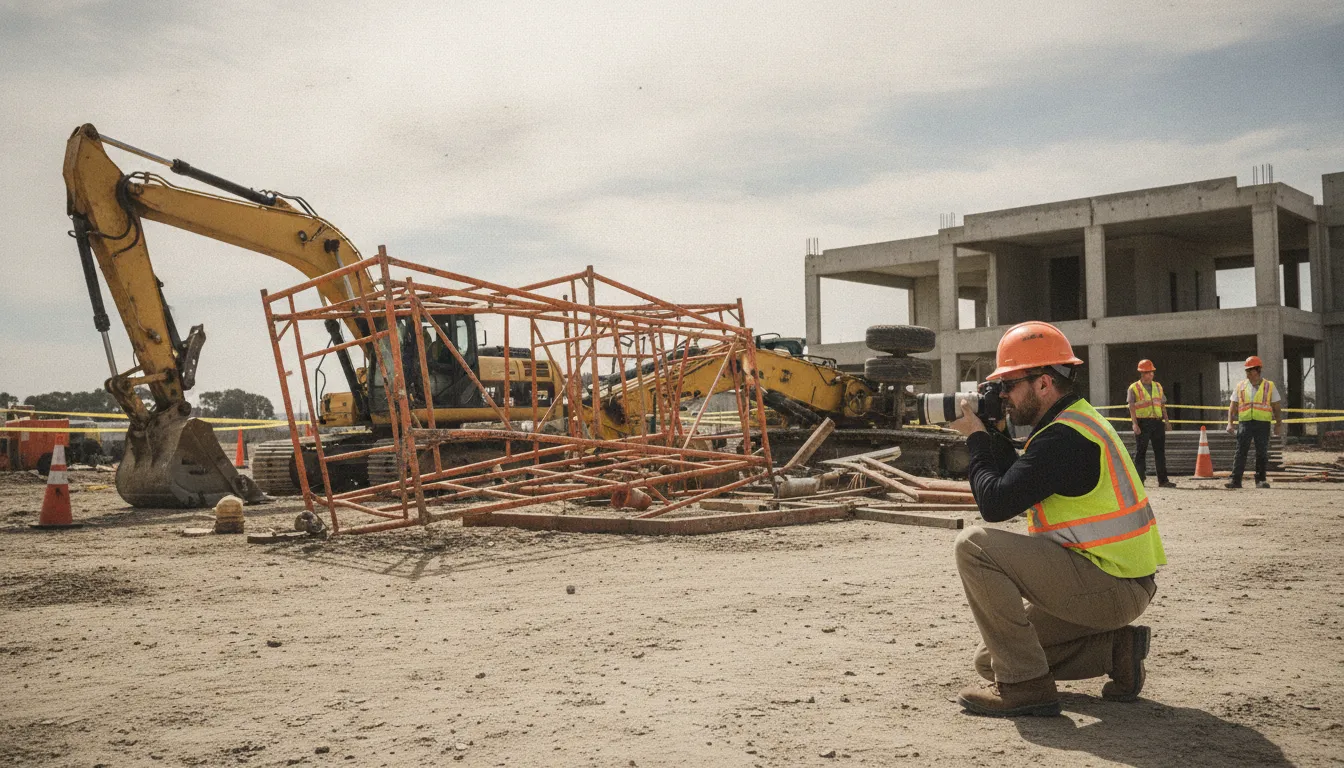
Construction projects often place employees of several companies in the same location. A separate subcontractor may create a falling-object hazard, leave an opening unguarded, operate equipment negligently, or violate a safety obligation. The identity of the injured worker’s employer and each company’s role must be established before liability can be evaluated.
A construction accident workers’ compensation claim may proceed alongside a civil claim against a legally responsible outside contractor. Contracts, daily logs, safety meeting records, incident reports, permits, and site-control evidence can clarify which entity controlled the activity that caused the injury.
Defective Products and Dangerous Property
A machine, tool, ladder, vehicle component, or safety device may cause injury because of a design, manufacturing, or warning defect. Product claims often require preservation of the exact item and review by a qualified expert. Altering, discarding, or returning the product before an investigation can impair important evidence.
An employee working away from the employer’s premises may also encounter unsafe property. A property owner or occupier may be responsible when a dangerous condition causes injury and the legal requirements for premises liability are met. Notice of the condition, control of the area, inspection practices, and warnings are often central issues.
Can Both Claims Proceed at the Same Time?
Yes, an injured California employee may often pursue workers’ compensation benefits and a third-party civil claim at the same time. Labor Code section 3852 preserves the action against another person, while workers’ compensation addresses statutory employment benefits. Careful coordination is necessary because evidence, settlement terms, liens, credits, and reimbursement rights may overlap.
Workers’ compensation can address authorized medical care and disability benefits while the civil matter is investigated or litigated. The third-party case focuses on proving responsibility and the full measure of legally recoverable damages. Different deadlines and procedures govern each claim, so progress in one does not necessarily protect the other.
Subrogation, Liens, and Employer Rights
When an employer or insurer has provided workers’ compensation benefits for an injury caused by a third party, it may seek reimbursement from the third-party recovery. This is commonly addressed through subrogation and a lien. The employer may also have rights to pursue the responsible party directly under California law.
The amount ultimately reimbursed is not always a simple total of benefits issued. Litigation costs, attorney fees, employer fault, settlement allocation, and other legal issues may affect the analysis. An injured worker should not assume that accepting a third-party settlement will resolve the workers’ compensation lien or preserve all future benefits.
Why Settlement Coordination Matters
A release drafted for a civil settlement can have consequences beyond the immediate payment. The parties must understand the scope of released claims, liens, reimbursement demands, and possible credit against future workers’ compensation liability. Resolving one matter without considering the other can create disputes or reduce the employee’s net recovery.
Experienced counsel can communicate with insurers, confirm lien positions, assess proposed allocations, and evaluate whether court or agency approval is required. The objective is not duplicate compensation for the same loss. It is lawful recovery through each available system while accounting for the rights of all parties.
What Evidence Strengthens a Third-Party Injury Case?
Strong evidence identifies the responsible third party, explains how the accident occurred, connects that conduct to the injury, and documents resulting losses. Useful proof may include photographs, video, witness information, incident reports, contracts, maintenance files, defective products, medical records, employment records, expert analysis, and communications created near the time of the event.
Evidence at a workplace can change quickly. Equipment may be moved, a spill may be cleaned, surveillance footage may be overwritten, and contractors may leave the project. A prompt preservation request can notify relevant parties that records and physical items connected to the accident must not be destroyed.
Steps to Preserve a Potential Claim
- Report the injury promptly. Notify the employer and provide accurate information so the event is documented through the appropriate workplace process.
- Obtain medical attention. Timely evaluation supports treatment and creates records connecting the condition to the accident.
- Document the scene. When safely possible, preserve photographs or video of the hazard, surrounding area, equipment, vehicles, and visible injuries.
- Identify witnesses. Record names and contact information for people who observed the accident, hazard, or relevant events before and after it.
- Preserve physical items. Request that defective tools, protective equipment, components, and other relevant objects remain available for inspection.
- Keep complete records. Save medical documents, work restrictions, wage information, receipts, correspondence, and notes about the injury’s effects.
- Avoid unsupported statements. Provide truthful facts, but do not speculate about fault or sign a release before understanding its consequences.

The workers’ compensation file may contain evidence relevant to the civil matter, but the claims remain distinct. If benefits have been disputed, information about a denied California workers’ compensation claim can help an injured worker understand the need for prompt review.
What Deadlines Apply to California Workplace Claims?
Deadlines depend on the type of claim, the defendant, the injury, and when relevant facts were discovered. A California personal injury lawsuit is generally subject to a two-year limitations period, while a claim involving a public entity usually requires a much earlier administrative filing. Workers’ compensation has separate notice and filing requirements.
Personal Injury and Workers’ Compensation Deadlines
California Code of Civil Procedure section 335.1 generally provides two years for an action involving injury caused by another’s wrongful act or neglect. Exceptions and different accrual rules may apply. An injured worker should not rely on the general period without a fact-specific analysis, particularly when multiple parties or delayed symptoms are involved.
Workers’ compensation commonly involves a one-year limitations period, but the rules include exceptions and depend on events such as the date of injury, provision of benefits, and employer knowledge. Employees should report injuries promptly and seek advice rather than assume that the civil deadline also protects the workers’ compensation case.
Claims Involving a Public Entity
If a California public entity or public employee may be responsible, the Government Claims Act generally requires a written claim concerning personal injury within six months after accrual. Additional rules govern rejection, late-claim applications, and subsequent lawsuits. These shortened procedures make immediate identification of every potential public entity especially important.
What Damages May a Third-Party Claim Provide?
A successful third-party claim may provide economic and noneconomic damages allowed under California law and supported by evidence. Potential categories include medical expenses, lost income, reduced future earning capacity, and pain and suffering. Recoverable amounts depend on causation, the injury’s effects, available proof, comparative fault, insurance, and other case-specific factors.
Economic Damages
Economic damages address measurable financial losses. They may include reasonable medical expenses attributable to the injury, past lost earnings, diminished future earning capacity, and other necessary costs. Medical opinions, billing records, employment documents, tax records, vocational evidence, and expert calculations may be needed to establish these losses.
Workers’ compensation benefits and civil damages are calculated under different rules. The fact that workers’ compensation covered some treatment or disability benefits does not by itself establish the value of the civil case. It does, however, create coordination issues that must be addressed when determining the injured worker’s net recovery.
Noneconomic Damages and Comparative Fault
Unlike workers’ compensation, a third-party civil claim may permit damages for pain, suffering, inconvenience, emotional distress, and loss of enjoyment of life. These losses require credible evidence about the injury’s nature, duration, treatment, limitations, and effect on daily activities. No single formula determines their value.
California’s comparative fault principles may reduce damages if the injured worker or another party shares responsibility. Defendants may dispute fault, causation, the necessity of treatment, or the extent of future losses. Thorough preparation must therefore address both the responsible party’s conduct and foreseeable defenses.
How Can an Attorney Evaluate Overlapping Claims?
An attorney can evaluate overlapping claims by identifying all legally distinct parties, preserving evidence, reviewing insurance and employment relationships, calculating deadlines, and coordinating workers’ compensation with civil litigation. Counsel can also assess damages, communicate with insurers, address liens, and explain how a proposed settlement may affect benefits and the injured worker’s net recovery.
The evaluation should begin with the accident facts and the worker’s employment status, then examine contracts, site control, product history, public-entity involvement, and insurance coverage. A reliable assessment also considers medical causation and the full effect of the injury rather than focusing only on the initial incident report.
Contact Hinden & Breslavsky for a consultation about a California workplace injury.
Frequently Asked Questions
These answers address common questions about third-party workplace injury claims in California. They provide general information, not legal advice for a particular matter. Because responsibility, deadlines, damages, and lien rights depend on specific facts, an injured employee should obtain an individual review before accepting a settlement or allowing a filing period to expire.
Can I file a third-party claim if I receive workers’ compensation?
Yes. California Labor Code section 3852 generally preserves an injured employee’s right to pursue damages against another person even when the employee seeks workers’ compensation. The claims must be coordinated because the employer or insurer may assert reimbursement, lien, or credit rights against a third-party recovery.
Who can be liable as a third party after a workplace injury?
A potentially liable third party may include a negligent driver, property owner, general contractor, subcontractor, equipment manufacturer, distributor, maintenance provider, or another legally separate person or entity. Liability depends on the party’s relationship to the employer, control, conduct, applicable duties, causation, and supporting evidence.
How long do I have to file a third-party injury lawsuit?
A California personal injury action is generally subject to a two-year limitations period, but exceptions and shorter deadlines can apply. Claims involving a public entity usually require an administrative claim within six months. Workers’ compensation follows separate deadlines, so an immediate case-specific review is important.
What happens to a workers’ compensation lien after settlement?
A workers’ compensation insurer or employer may seek reimbursement from a third-party recovery for certain benefits provided. The lien’s treatment can depend on litigation costs, attorney fees, employer fault, settlement terms, and other legal issues. It should be evaluated and addressed before the civil settlement is finalized.