



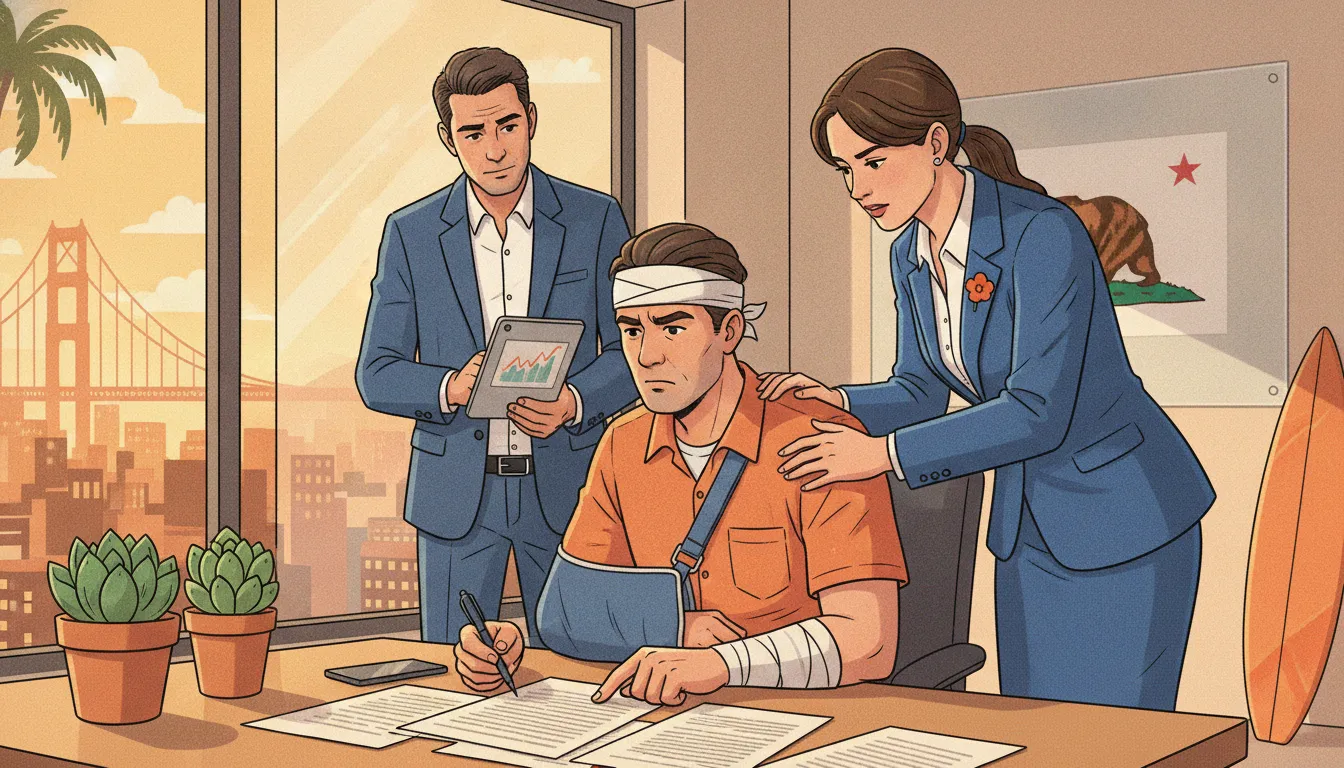
A job injury can stop your paycheck before it stops the bills. California law provides several forms of support, but each benefit serves a different need.
Speak with a Los Angeles workers compensation attorney today.
California workers compensation benefits can provide medical treatment, partial wage replacement during recovery, payments for lasting disability, retraining support, and benefits for eligible dependents after a fatal injury. Which benefits apply depends on the medical evidence, work restrictions, wages, and claim status. These benefits generally do not include pain and suffering.
Knowing the benefit categories is only the first step because eligibility, payment amounts, and claim disputes can change what an injured worker actually receives. To identify the support that may apply to your case, start with California workers compensation benefits at a glance. Here’s how.
California workers compensation benefits at a glance
California workers compensation benefits fall into five main groups: medical care, temporary disability, permanent disability, supplemental job displacement, and death benefits. Together, they address treatment, lost wages, lasting disability, return-to-work needs, and support for dependents. The California Division of Workers’ Compensation provides an official overview of these benefit categories.
Benefits side by side
Each category serves a different purpose. One claim may involve several categories as the worker’s health and ability to work change. This table offers a quick way to compare the main focus of each benefit.
| Benefit category | Main purpose | Key claim question |
|---|---|---|
| Medical care | Treatment for a work-related injury or illness | What care is needed for recovery? |
| Temporary disability | Partial replacement of wages lost during recovery | Is the injury causing current wage loss? |
| Permanent disability | Benefits for permanent disability | Does disability remain after recovery? |
| Supplemental job displacement | Support tied to returning to work | Can the worker return to the prior job? |
| Death benefits | Payments to eligible dependents after a work-related death | Who qualifies as a dependent? |
Medical care focuses on treatment needed to recover from a job-related injury or illness. It can also include reasonable travel costs for treatment, such as mileage, parking, and tolls. Temporary disability partly replaces wages lost during recovery.
Permanent disability applies when disability remains. Supplemental job displacement addresses return-to-work needs, while death benefits support eligible dependents after a work-related death. Readers can see how the categories fit together in this guide to California workers compensation benefits.
What determines eligibility and amounts?
The benefit categories are standard, but each claim is not. Eligibility and payment amounts depend on the injury, work status, medical findings, wages, dependents, and other claim facts. A worker may qualify for one benefit at first, then another as the claim develops.
For example, temporary disability concerns wage loss while a worker recovers. Permanent disability concerns disability that remains. Death benefits go to a spouse, children, or other dependents after a work-related death.
Rates and payment periods can also depend on the date of injury and the evidence in the claim file. A detailed review of compensation benefit amounts can help explain why payments differ. Workers’ compensation does not include pain and suffering or punitive damages.
How benefits can change during a claim
Benefits may shift as medical care continues and new reports describe the worker’s limits. A worker might receive treatment and temporary disability early in the claim. Later findings may raise questions about permanent disability or help with returning to work.
A denial or dispute can affect access to a benefit, but it does not change the purpose of each category. Clear medical records, wage information, and dependent details help show which benefits apply. The right mix depends on the facts, not merely the name of the injury.
How does workers’ compensation medical treatment work?
Care for the work-related condition
Medical care is one of the main California workers compensation benefits. It covers reasonable and necessary treatment for a work-related injury or illness. The goal is to help the worker recover and return to work when it is safe. The employer or its workers’ compensation insurer pays for approved care, rather than the injured worker.
Treatment may include doctor visits, tests, medicine, therapy, and other care tied to the work injury. The California Division of Workers’ Compensation explains that benefits provide the medical treatment needed for recovery. Care for an unrelated health issue usually belongs outside the workers’ compensation claim.
An injured worker should report the injury and file a claim as soon as possible. Once a claim is filed, the employer must provide medical care. Quick reporting can also reduce delays. For an emergency, call 911 or visit an emergency room and tell the staff the injury is job-related.
Treatment networks and authorization
The claims administrator may direct care through a treatment network. The worker may need to select a doctor from that network and follow its rules when changing doctors. Ask the claims administrator for the current provider list and instructions in writing. Keep a copy of every request and response.
A treating doctor may request tests, therapy, medicine, or a referral. The claims administrator can review whether the requested care is needed for the work injury. An authorization dispute can delay treatment, even when the worker is still in pain. A denial should explain what was denied and what review rights apply.
If care is denied or delayed, request the decision in writing and give it to the treating doctor. Ask whether the request needs more medical support or a clearer link to the injury. Legal help may also protect access to benefits for injured workers when a dispute remains unresolved.
Records that protect access to care
Clear records help the doctor explain why treatment is needed. At each visit, describe symptoms, limits, and changes with specific details. Explain which work tasks increase pain and how the injury affects sleep, movement, or daily tasks. Do not minimize symptoms, but do not guess or overstate them.
- Keep copies of claim forms, medical reports, work notes, and authorization letters.
- Track appointments, missed work, medicine, and changes in symptoms.
- Save receipts and travel records for medical visits, including mileage, parking, and tolls.
- Follow treatment instructions and promptly explain any missed appointment.
Workers may receive reimbursement for reasonable travel costs tied to medical care. Good records also show whether care was requested, approved, or delayed. For a broader view of covered care and payments, review the guide to California workers compensation benefits.
When symptoms change, tell the treating doctor promptly and ask that the change appear in the medical record. If the insurer gives unclear directions, ask for written answers. Consistent follow-up creates a clear record and helps prevent avoidable gaps in treatment.
Temporary disability benefits while you recover
Partial wage replacement during recovery
Temporary disability benefits help replace part of the wages lost when a work injury keeps you from doing your usual job. They are not a payment for pain or the injury itself. The California Division of Workers’ Compensation explains that benefits partially replace wages while you recover and help you return to work.
The amount paid may depend on your earnings and whether you can work at all. If your pay records vary, gather recent wage statements, timecards, and proof of regular overtime. These records can help show what you earned before the injury. Our guide to compensation benefit amounts explains the payment issue in more detail.
Medical restrictions and modified duty
Your treating doctor should state what work you can safely perform during recovery. Restrictions may address lifting, standing, driving, repeated movement, or the hours you can work. Give each written restriction to your employer and keep a copy. Clear records reduce confusion about what tasks are safe.
An employer may offer modified duty that fits the doctor’s limits. Review the duties, schedule, location, and expected pay before you start. Tell your doctor if the actual job conflicts with the written limits. Do not ignore pain or perform a barred task just because a supervisor asks.
Modified work can affect whether temporary disability payments continue or change. The result depends on the work offered, your medical limits, and the wages available during recovery. Hinden & Breslavsky’s detailed guide to temporary disability benefits covers these issues further.
Payment interruptions and careful records
Payments can be interrupted when medical reports are late, work status is unclear, or the insurer disputes whether benefits remain due. A return-to-work offer may also raise questions about your restrictions and expected wages. Ask for decisions and offers in writing so you can review the stated reason.
Keep one file with disability notes, pay stubs, benefit notices, work offers, and messages with the claims administrator. Track each missed or changed payment by date and amount. Also note when you sent medical updates or replied to a work offer. This timeline can help uncover errors and support a prompt response to a dispute.
Do not assume a stopped check means the claim has ended. Read the notice, compare it with the latest medical report, and ask why payment changed. If the explanation does not match your records, seek legal advice before accepting a decision that may affect your California workers compensation benefits.
What are permanent disability benefits?
Permanent disability benefits may apply when a work injury leaves lasting limits after the worker’s condition has become stable. Doctors often call this point maximum medical improvement, or MMI. It means further care is unlikely to cause a major change soon. It does not mean treatment must stop or that every medical issue has ended.
These payments address lasting loss of function tied to the work injury. They are one part of the California workers compensation benefits system. They are separate from temporary disability payments, which help replace wages during the recovery period.
How the disability rating is set
After MMI, a treating doctor or medical evaluator describes any lasting impairment and work limits. The medical report becomes a key part of the rating process. A claims administrator may then use the report and other required factors to calculate a permanent disability rating.
The rating reflects the level of lasting disability, not just the injury’s name. The worker’s occupation, age when injured, and the share caused by work may affect the final result. Disputes can arise when medical reports differ or the parties disagree about what caused the impairment.
What the rating means
A permanent disability rating helps determine whether benefits are due and how those benefits are calculated. It is not a promise of a set payout. Each claim depends on its medical evidence, legal issues, and the rules that apply to the injury.
The California Division of Workers’ Compensation lists permanent disability among the benefits available in the state system. Its workers’ compensation benefits guide also lists temporary disability and supplemental job displacement benefits. That distinction matters because one injury may raise several benefit questions at different stages.
Permanent disability and returning to work
The word “permanent” describes the lasting medical impairment. It does not always mean the worker can never hold a job again. Some workers return to their prior role, while others need changed duties, fewer physical demands, or a different type of work.
Work limits should be compared with the actual tasks required by the job. A worker may be able to perform some duties safely but not others. Since the state system is also designed to help injured workers return to work, job options can remain important after MMI.
Permanent disability issues can shape medical disputes, work planning, and settlement talks. No result should be assumed before the medical record and rating are reviewed. Clear reports about lasting limits and job duties help the parties assess the claim on its own facts.
Get help reviewing a delayed or disputed workers compensation benefit.
Can job retraining help you return to work?
Job retraining can help when an injury keeps you from returning to your prior role. It may build skills for work that fits your lasting medical limits. This support is one part of the broader California workers compensation benefits system.
The California Division of Workers’ Compensation lists supplemental job displacement among the benefits available to injured workers. The state’s system is also designed to help injured workers return to work. Still, access to retraining support depends on the facts of each claim.
When job displacement support may apply
Supplemental job displacement support may become relevant when a worker has lasting limits and cannot return to the usual job. It can also matter when the employer cannot offer suitable regular, modified, or alternative work. Medical restrictions and any written job offer should be reviewed together.
This support focuses on preparing for a different work path. It may help a worker pursue retraining or develop useful skills for another role. The Division of Workers’ Compensation benefits guide is a sound starting point for current state information.
Steps for using available support
Start before choosing a course or training plan. A clear record of your restrictions, work options, and goals can help you avoid spending support on the wrong path.
-
Get your current work restrictions in writing from your treating doctor. Make sure they describe tasks you can and cannot perform.
-
Ask your employer whether regular, modified, or alternative work is available. Request written details about the duties, schedule, location, and physical demands.
-
Contact the claims administrator in writing. Ask whether supplemental job displacement support applies and what documents are needed before you select training.
-
Compare programs against your medical limits and realistic job options. Check the course schedule, required equipment, and likely duties in the target role.
-
Keep copies of medical reports, job offers, notices, emails, and receipts. Organized records make it easier to address delays or disputes.
Choosing a practical retraining path
A useful plan should match both your abilities and the jobs you can reasonably pursue. For example, training that leads back to work with the same unsafe physical demands may not solve the core problem. Focus on skills that fit your doctor’s restrictions.
Review every deadline and instruction shown on claim notices before taking action. If eligibility, an employer’s offer, or the use of support is disputed, get legal guidance promptly. The workers’ compensation process can be complex, and early review may prevent avoidable mistakes.
What benefits may families receive after a fatal injury?
Who may qualify?
When a worker dies from a job-related injury or illness, California workers’ compensation may provide death benefits to certain surviving dependents. These payments cannot replace a loved one, but they may help a family manage the financial loss. The claim must show both a covered death and the survivor’s legal right to benefits.
The California Division of Workers’ Compensation explains that death benefits may go to a spouse, children, or other dependents. Dependency is a legal issue, not just a question of close family ties. Evidence about the survivor’s relationship to the worker and financial support may affect eligibility.
Payment and burial support
Death benefits generally include payments for eligible dependents and reasonable burial expenses. For injuries occurring on or after January 1, 2013, state guidance caps reasonable burial expenses at $10,000. Older injuries may follow a different cap, so the injury date matters.
State schedules set different total benefit amounts based on the injury date and the number and type of dependents. Benefits for some totally dependent minors may continue until the youngest minor turns 18. A disabled minor may qualify for payments for life. Families can review a broader guide to California workers compensation benefits while assessing possible support.
These rules do not mean every family will receive the same payment. The insurer may dispute whether the death arose from work, whether a survivor was dependent, or which schedule applies. Each issue can change the claim’s value or outcome.
Why timing and legal review matter
Families should act promptly, even while handling funeral plans and grief. State guidance says families generally have one year from the date of death to start proceedings. Other legal time limits may also apply.
Keep available records such as the death certificate, medical reports, burial bills, and proof of the family relationship. A lawyer can review the facts, explain which documents may help, and address disputes before deadlines pass. Hinden & Breslavsky’s workers’ compensation team can provide guidance in several languages when a family needs help understanding the process.
Why do California workers’ compensation disputes happen?
Disputes often begin when the worker, employer, doctor, and claims administrator do not agree on a key part of the claim. The disagreement may concern how the injury happened, which care is needed, or what work the employee can safely perform. These issues can delay California workers compensation benefits or lead to a denial.
Work connection and medical care
A claims administrator may question whether an injury arose from the job. This issue is common when symptoms appeared over time or no one saw a specific incident. A worker’s prior health problems may also become part of the dispute. Clear reports and medical records can help show when symptoms started and how work affected them.
Medical disputes may concern the diagnosis, requested care, treating doctor, or need for more treatment. California’s Division of Workers’ Compensation states that benefits provide medical treatment for work-related injuries and illnesses. It also notes that reporting promptly helps prevent problems and delays in care. Its injured worker guidance explains these basic rights and duties.
Disability, payment, and return to work
Doctors may disagree about whether a worker can return to regular duties, needs restrictions, or has reached a stable condition. Those medical opinions can affect temporary disability payments, permanent disability ratings, and the timing of a return-to-work offer. A dispute may also arise if the offered job does not match the doctor’s limits.
Payment disputes often focus on wage records, benefit rates, missed checks, or the type of disability owed. Workers should compare each notice with their pay records and medical reports. A detailed guide to a denied workers’ comp claim can help workers understand possible next steps after an adverse decision.
Steps that protect the claim
Early action creates a clearer record and makes it easier to address errors. Report the injury to the employer as soon as possible, then complete and return the DWC-1 claim form. Keep a copy of the form and note when and how it was delivered. Also save benefit notices, pay stubs, medical reports, work restrictions, and messages from the employer or insurer.
- Attend medical appointments and describe symptoms, job duties, and limits in clear terms.
- Follow written work restrictions and ask the doctor to clarify any unclear limits.
- Review each claims notice, record its deadline, and respond with requested records on time.
- Document any return-to-work offer, including the duties, hours, location, pay, and start date.
- Track benefit checks and compare each payment with the period listed on the notice.
Seek legal advice when a claim is denied, treatment is delayed, payments stop, or a return-to-work offer seems unsafe. A Los Angeles workers’ compensation attorney can review the notices, medical record, and deadlines. Counsel can also explain which dispute process may apply to the worker’s specific facts.
Frequently Asked Questions
What happens if a work-related injury results in death in California?
California workers’ compensation may pay death benefits to a surviving spouse, children, or other dependents after a work-related death. Benefits can include burial expenses and ongoing payments based on dependency and the date of injury. The California Division of Workers’ Compensation provides current payment amounts, eligibility rules, and filing deadlines.
When should I get an attorney for a California workers’ compensation claim?
Consider speaking with an attorney when a claim is denied, benefits are delayed, medical treatment is disputed, or a permanent disability rating seems incorrect. Legal guidance may also help when an employer disputes whether the injury happened at work. An attorney can explain available benefits, deadlines, evidence requirements, and options for challenging a decision.
Can I get other financial assistance besides workers’ compensation benefits in California?
Other assistance may be available, but eligibility depends on the worker’s health, wages, employment status, and claim circumstances. Possible programs include State Disability Insurance, Paid Family Leave for eligible caregivers, Social Security disability benefits, and employer-provided benefits. Receiving one benefit can affect another, so workers should confirm the coordination rules before applying or accepting payments.
What are my employer’s responsibilities under California workers’ compensation laws?
California employers must carry workers’ compensation coverage and follow required injury reporting and claim procedures. After learning about an injury, an employer should provide a claim form and submit the completed form to its claims administrator. According to the California Division of Workers’ Compensation, an employer must provide medical care once the worker files a claim.
What can I do if my California workers’ compensation claim is pending but I need medical care?
Report the injury promptly, complete the DWC-1 claim form, and give it to the employer. Filing the form opens the workers’ compensation case and triggers the employer’s duty to provide medical care. For an emergency, call 911 or go to an emergency room, tell staff the condition is job-related, and notify the employer as soon as safely possible.
Get clear guidance on the benefits available to you
A workers’ compensation claim can become difficult when treatment is delayed, disability checks stop, or an insurer disputes whether an injury is work-related. Hinden & Breslavsky, APC helps injured workers understand their rights, respond to disputes, and pursue the benefits supported by their claim.
Contact a Los Angeles workers’ compensation attorney to discuss your claim and next steps.