



One patient lift can end a healthcare worker’s shift and threaten months of income. Repeated strain, needle injuries, violence, and workplace illness can be just as damaging.
Injured while caring for patients? Schedule a free consultation with Hinden & Breslavsky to discuss your California workers compensation claim.
Workers comp for nurses California provides protection to nurses, CNAs, home health aides, and other employees injured or made ill because of their jobs. Coverage can apply to sudden incidents, such as a patient-lifting back injury or needlestick, and repeated strain or harmful exposure that develops over time. California employers must provide benefits for work-related injuries or illnesses, according to the state Division of Workers’ Compensation. Benefits may cover needed medical care, part of lost wages, and disability payments, but workers should report injuries promptly and preserve records showing when symptoms began. Strong records can help connect the injury to the job when an insurer delays, disputes, or denies the claim.
Knowing that coverage exists is only the first step; healthcare workers also need to understand eligibility, benefits, deadlines, and what to do after an injury. How workers comp for nurses in California works explains that process from the first report through the claim decision. Here’s how.
How Workers Comp for Nurses in California Works
Workers comp for nurses in California generally covers employees whose jobs cause an injury or illness. Registered nurses, licensed vocational nurses, CNAs, home health aides, and other hospital staff may qualify. The key questions are whether the person is an employee and whether the health problem arose from work.
Who may qualify for coverage
A healthcare worker does not need a certain clinical title to seek benefits. Coverage can apply to patient care staff, technicians, aides, and other employees working in healthcare settings. California employers must pay workers compensation benefits for a work-related injury or illness, according to the California Division of Workers’ Compensation.
Employee status matters more than the label on a badge. A worker called an independent contractor may face a dispute about their true work status. The facts of the job relationship and the cause of the condition can affect whether a claim is covered. Our broader workers compensation eligibility guide explains the basic coverage questions.
What counts as work related
A covered condition may follow one event, such as a fall, needle stick, patient assault, or strain while moving a patient. It may also build over time. Repeated lifting, bending, or other job demands can lead to gradual pain or injury.
California guidance says work injuries can result from one event or repeated exposure. That means a nurse should not assume a slow-developing condition falls outside the system. The worker still needs to connect the injury or illness to the job through medical and workplace evidence.
- A sudden injury may have a clear time, place, and cause.
- A gradual injury may develop across weeks, months, or years of repeated work.
- A work-related illness may stem from harmful exposure tied to job duties.
How no-fault coverage applies
Workers compensation is generally a no-fault system. An eligible employee usually does not need to prove that a supervisor, coworker, or patient acted carelessly. The focus is whether the injury or illness arose from work, not who should take the blame.
No-fault coverage does not mean every claim is approved. An employer or insurer may question employee status, medical proof, reporting, or the link between work and the condition. Workers can review common claim issues in the firm’s frequently asked questions.
Prompt notice helps preserve evidence and gives the employer a chance to review what happened. California warns that a worker could lose benefits if the employer does not learn of an injury within 30 days. Each case depends on its facts, so coverage and available benefits cannot be promised in advance.
Common injuries among nurses and healthcare workers
In short: Common healthcare injuries include lifting-related back and shoulder damage, slips and falls, needlesticks, patient violence, repeated-strain conditions, and harmful workplace exposure.
Nurses and healthcare workers can be hurt in one sudden event or through repeated exposure over time. California’s Division of Workers’ Compensation confirms that both types of work injuries may qualify for benefits. This distinction matters because harm from one hard shift can differ from pain that builds for months.
Claims for workers comp for nurses California may involve physical injuries, illness, or mental harm tied to work. The key question is whether the job caused or made the condition worse. A diagnosis and clear records can help connect the condition to workplace duties.
Patient handling and repeated strain
Lifting, turning, or moving patients can strain the lower back, shoulders, neck, and knees. An injury may follow one difficult transfer or develop after many shifts. Reaching across beds and catching a falling patient can also cause sudden sprains or tears.
Repeated tasks can affect the hands, wrists, elbows, and shoulders. Charting, gripping tools, pushing equipment, and holding one position may slowly cause pain or limited motion. These gradual conditions may still fit workers compensation eligibility rules when medical evidence links them to the job.
Slips, sharps, and harmful exposure
Fast-paced care settings contain many hazards beyond lifting. Wet floors, cords, crowded halls, or rushed movement can lead to slips and falls. A fall may cause bruises, broken bones, head injuries, or damage to the back and joints.
Needlesticks and cuts from medical tools may expose a worker to blood or other body fluids. Healthcare staff may also face infectious illness, cleaning chemicals, medication residue, radiation, or poor air quality. The harm may require prompt testing and follow-up care even when symptoms are not immediate.
- Report a needlestick, cut, splash, or suspected exposure as soon as possible.
- Record the source, location, witnesses, protective equipment, and care received.
- Seek medical attention for new symptoms after the event.
Workplace violence and emotional harm
Nurses, aides, and other staff may face hitting, kicking, biting, threats, or other violence while providing care. A physical attack can cause visible wounds as well as lasting pain. Threats or repeated traumatic events may also affect sleep, focus, and emotional health.
Violence can come from patients, visitors, coworkers, or others at the worksite. Staff should document what happened and seek care for both physical and mental symptoms. A report should describe the event plainly, including any earlier threats, security response, and witnesses.
Not every work injury is easy to see at first. Back pain may increase after several shifts, while an exposure or traumatic event may cause symptoms later. Detailed reports and medical records help show how the injury began and how it affects work.
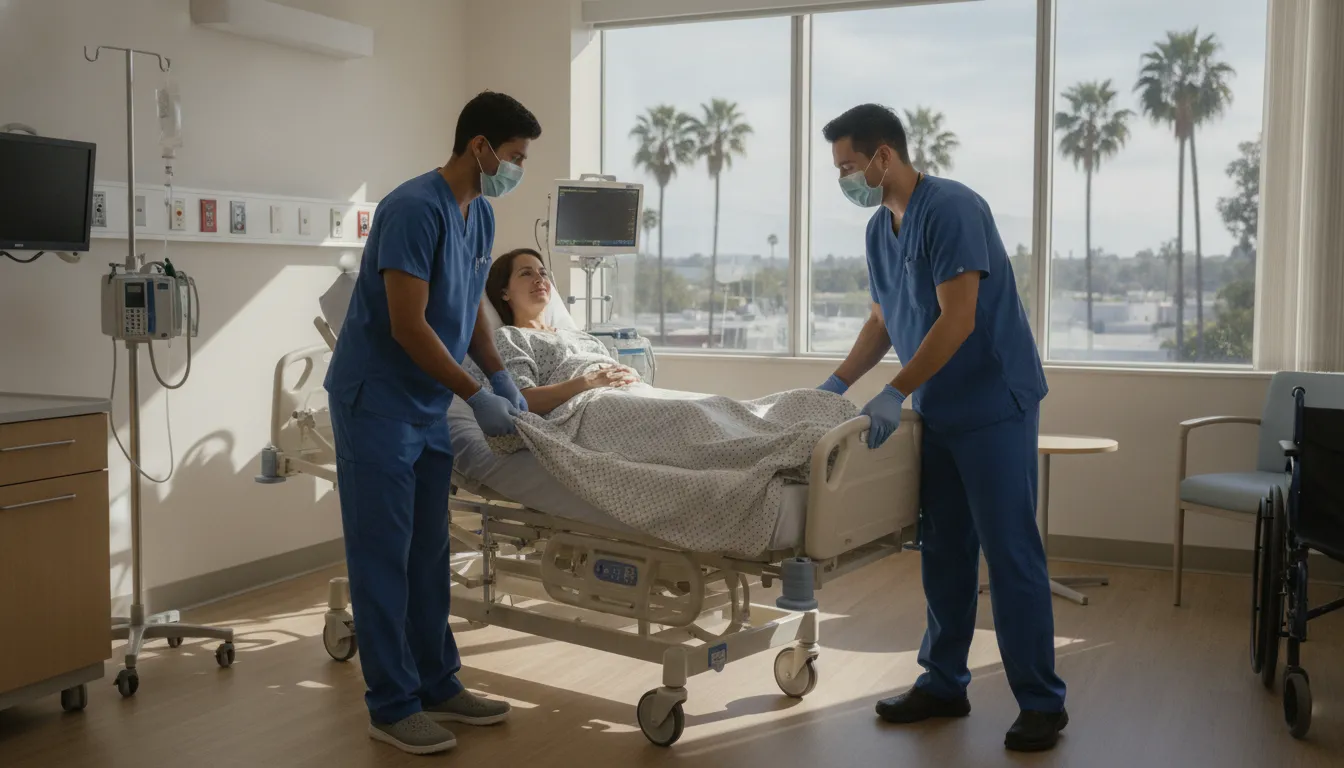
What should a healthcare worker do after an injury?
After a work injury, protect your health first and create a clear record of what happened. California employers are required by law to provide workers’ compensation benefits for work-related injuries or illnesses. The steps below can help preserve your claim while you focus on care.
Immediate care and notice
A serious injury needs emergency care right away. For a less urgent injury, tell your supervisor as soon as possible and ask where to get treatment. Give a clear account of the event, affected body parts, symptoms, witnesses, and any unsafe condition involved.
-
Get needed care. Call for emergency help when the injury is severe. Otherwise, seek prompt medical guidance through your employer’s process.
-
Report the injury. Tell a supervisor or manager promptly, even if symptoms seem mild. Ask for written proof that the report was received.
-
Document what happened. Write down the date, place, task, symptoms, and witness names. Save photos, messages, schedules, and incident reports.
-
Request and submit the DWC-1 claim form. Complete your section with accurate details and keep a copy. Ask the employer for a copy after it completes its section.
-
Attend medical visits. Describe every symptom and explain how the injury affects your work. Ask the provider to put work limits in writing.
-
Follow restrictions and keep records. Give written restrictions to your employer and do not work beyond them. Save forms, medical notes, bills, and claim correspondence.
The claim form and medical record
A nurse may be hurt in one event, such as a fall or patient transfer. Harm can also develop from repeated exposure or motion over time. California’s Division of Workers’ Compensation confirms that both single events and repeated exposures may qualify as work injuries.
Be consistent and specific when describing your symptoms to supervisors, claim staff, and medical providers. Note when pain began, what tasks make it worse, and which duties you cannot safely perform. If a delayed workers comp claim creates problems, your saved records can show what you reported and when.
Work restrictions and ongoing records
Read each medical note before leaving the appointment. Make sure it lists limits such as lifting, standing, bending, patient contact, or shift length when those limits apply. Send the note through a trackable method, then save proof that your employer received it.
Keep a simple claim file in paper or digital form. Add every new medical note, work status report, DWC-1 copy, letter, email, and benefit notice. This organized record can help resolve disputes and help a lawyer review the claim if issues arise.
What benefits may be available?
Workers comp for nurses in California may cover care, lost wages, lasting disability, job retraining, and support for surviving family members. The benefits available depend on the injury, medical findings, work limits, and other facts of the claim.
Medical care and temporary disability
California workers’ compensation guidance states that employers must pay benefits for a work-related injury or illness. For an injured nurse, medical care may include exams, treatment, medicine, therapy, and other care tied to the injury. Coverage depends on what is medically needed and authorized.
Temporary disability benefits may replace part of lost wages while a nurse cannot perform regular duties during recovery. They may also apply when medical limits reduce available hours or prevent the employer from offering suitable modified work. These payments are not the same as full wages.
| Benefit | Main purpose | When it may apply |
|---|---|---|
| Medical care | Treat the work injury or illness | Care is medically needed and tied to work |
| Temporary disability | Replace part of lost wages | Recovery limits work for a time |
| Permanent disability | Address lasting loss of function | The injury leaves lasting impairment |
| Job displacement | Help fund retraining or skill building | Returning to the former job is not possible |
| Death benefits | Support eligible dependents | A work injury or illness causes death |
Permanent disability and retraining support
Permanent disability benefits may apply when a nurse has lasting limits after the condition becomes stable. The amount may depend on medical findings and how the impairment affects future work. A lasting impairment does not always mean the nurse cannot work at all.
Supplemental job displacement benefits may help with retraining when the nurse cannot return to the former job. Eligibility depends on the claim facts and whether suitable work is offered. Our guide to California workers comp benefits explains issues that can arise in longer claims.
Death benefits and claim-specific limits
Death benefits may be available to qualifying dependents when a work-related injury or illness causes a nurse’s death. These benefits may include support payments and burial-related costs. Eligibility can depend on the family relationship, dependency, medical proof, and filing requirements.
Not every claim includes every benefit in the table. A claim may also change as treatment continues and doctors update work limits. Nurses should keep medical records, work-status notes, and notices from the insurer so benefit issues can be reviewed.
Why healthcare workers’ claims can become complicated
In short: Healthcare claims often become complicated when an injury developed gradually, reporting was delayed, medical records conflict, or an insurer disputes whether work caused the condition.
Workers comp for nurses in California can involve facts that are hard to capture in one incident report. A nurse may finish a short-staffed shift despite back pain, then report it after symptoms worsen. That delay can give an insurer room to question when and where the injury began.
Delayed reports and gradual injuries
Healthcare workers often keep caring for patients before caring for their own injuries. Yet California warns that workers should report an injury promptly. If an employer does not learn of it within 30 days, the worker could lose benefits in some cases. The state’s injured worker guidance explains this reporting rule.
Not every injury starts with a fall or a single difficult lift. Repeated transfers, long hours on foot, and constant reaching may cause pain that builds over time. California workers’ compensation can cover injuries from repeated exposure, but proving the cause may require a clear work history.
Disputes about work-related causes
An insurer may argue that age, an old injury, exercise, or a second job caused the condition. The dispute can be harder when no coworker saw a specific event. Records that connect symptoms to shifts, tasks, and changes in workload can help show the pattern.
- A CNA notes each patient transfer that worsened shoulder pain.
- A nurse records the date of a needlestick and the people notified.
- A home health aide saves visit records after repeated lifting causes back pain.
- A hospital worker tracks dates, locations, and protective equipment after an exposure.
Exposure claims pose a different proof problem. A worker may treat many patients, move between units, or lack access to complete source records. Dates, assignments, test results, witness names, and written notices can help document what happened without relying on memory alone.
Treatment and return-to-work pressure
The claims process can also shape medical care and work status. A worker may face pressure to return before feeling ready, while the employer or insurer questions restrictions. Short staffing can make modified duty difficult, especially when a role still involves lifting, standing, or direct patient care.
Keep copies of work notes, restrictions, appointment records, messages, and claim forms. Ask the doctor to describe tasks that cause symptoms and limits that apply at work. If the insurer delays action or disputes the cause, review the practical steps for a delayed workers comp claim.
Employer-arranged treatment can create another point of conflict when the worker feels concerns were missed or restrictions are unclear. The key is a consistent record across reports, medical visits, and messages. Gaps or conflicting details can make a valid claim harder to assess.

When might legal help be useful?
Legal help may be useful when a nurse’s claim stops moving, key facts are disputed, or work pressure puts recovery at risk. A lawyer can review the record, explain available options, and help the nurse respond before a deadline passes. This support can matter because California employers must pay workers’ compensation benefits for work-related injuries or illnesses, as the state’s injured-worker guidance explains.
Problems with the claim or medical process
A denial or long delay is a clear reason to consider legal advice. The same is true when the insurer disputes whether an injury arose from nursing duties. For example, it may question whether back pain came from patient transfers or developed through repeated lifting. Nurses facing a workers’ compensation dispute may need help gathering records and presenting a clear work history.
Legal help may also be useful during a Qualified Medical Evaluator, or QME, dispute. Concerns can involve the doctor’s specialty, the accuracy of the report, or the limits assigned after an exam. An attorney can explain how the report may affect treatment, temporary disability, work restrictions, and the next steps in the case.
Pressure at work and lasting impairment
Return-to-work pressure can create hard choices for an injured nurse. A supervisor may offer modified duty that still conflicts with medical restrictions. A nurse may also worry about reduced shifts, discipline, or other negative treatment after reporting an injury. Legal advice can help the worker compare written restrictions with the offered tasks and document each concern.
Permanent impairment is another point when advice may be useful. Once a condition becomes stable, medical findings can shape future care and disability issues. Questions may arise about an impairment rating, long-term limits, or whether the nurse can safely return to bedside work. A lawyer can review the medical record and explain which issues remain open.
Possible claims beyond workers’ compensation
Some workplace injuries may involve someone other than the employer. Examples include a crash caused by another driver during work travel or harm tied to defective equipment. These facts may raise a possible third-party injury claim alongside workers’ compensation. A workplace injury lawyer can assess whether separate claims may exist and how they could affect each other.
Retaliation concerns also deserve prompt attention, especially when schedule changes or threats follow an injury report. Keep copies of medical restrictions, claim notices, emails, schedules, and written messages. A dated record helps counsel assess what happened, separate medical issues from workplace conduct, and identify any time-sensitive response.
How to protect your claim and avoid common mistakes
Create a clear record from the start
Strong documentation helps show when, where, and how an injury happened. Report the injury promptly, even if symptoms seem minor at first. California warns that waiting more than 30 days may put your benefits at risk. Review the state’s guidance for injured workers for the reporting rule and other basic steps.
Ask for a copy of the incident report, and check it for errors before signing. Write down the names of witnesses, charge nurses, supervisors, and anyone who received your report. Save copies of emails, texts, forms, and other work communications about the injury.
- Record the date, time, unit, task, and location.
- Describe the event and your symptoms in plain, exact terms.
- Note any patient transfer details, equipment used, staffing limits, or safety issue.
- Keep exposure logs for contact with blood, chemicals, infectious disease, or other hazards.
Keep medical details consistent
Tell each medical provider that the injury or illness is work-related. Give an accurate account of your symptoms and how they affect your nursing duties. Keep copies of visit notes, test results, work-status reports, referrals, bills, and treatment instructions.
Follow medical restrictions and attend scheduled visits when possible. If your employer offers modified work, save the written offer and compare it with your restrictions. Note any task that exceeds those limits, then report the problem in writing.
Gradual injuries also need a careful timeline. California recognizes injuries caused by repeated exposure at work, not only one sudden event. Track when symptoms began, which tasks made them worse, and when you first sought care.
Avoid gaps and harmful statements
Do not guess about facts, minimize symptoms, or change your account to please a supervisor. Correct mistakes in reports or medical records as soon as you find them. Keep your notes factual, dated, and stored somewhere you can access outside work.
Avoid posting injury details, photos, activities, or guesses about your claim on social media. Insurers may compare public statements with medical records and work restrictions. If an insurer delays action despite clear records, learn what to do about a delayed workers comp claim.
Do not sign blank forms or rely only on verbal promises. Read each document, request a copy, and ask questions when wording is unclear. For workers comp for nurses in California, an organized record can help preserve key facts during a dispute.
Questions about a delayed, denied, or disputed claim? Talk with Hinden & Breslavsky about your workplace injury before the FAQ below.
Frequently Asked Questions
Is a nurse eligible for workers’ compensation in California?
Yes. Nurses, CNAs, home health aides, and other employees may qualify when an injury or illness arises from their work. California law requires employers to provide workers’ compensation benefits for job-related injuries and illnesses, according to the California Division of Workers’ Compensation. Eligibility does not depend on whether the worker is full-time or works in a hospital.
What types of work-related injuries can California nurses claim workers’ compensation for?
California healthcare workers may claim benefits for injuries connected to their jobs. Common examples include back strains from moving patients, falls, needlestick injuries, workplace violence injuries, and harmful exposures. A covered injury may result from one incident or repeated workplace exposure over time. Medical records and a clear report describing how the condition relates to work can help support the claim.
Can nurses receive workers’ compensation for gradual injuries or work-related illnesses?
Yes. California workers’ compensation can cover cumulative injuries and occupational illnesses, not only sudden accidents. The California Division of Workers’ Compensation explains that injuries may result from repeated workplace exposures. Examples include back pain from repeated lifting, hand injuries from repetitive tasks, or an illness caused by workplace exposure. The worker must show that job duties caused or contributed to the condition.
What benefits are available to injured nurses under California workers’ compensation?
Available benefits may include medical care, temporary disability payments during recovery, permanent disability payments, and help returning to work. Death benefits may be available to qualifying dependents after a fatal workplace injury or illness. The benefits available to a nurse, CNA, or home health aide depend on the medical findings, work restrictions, wages, and whether the claim is accepted.
When should a California healthcare worker report a workplace injury?
A California healthcare worker should report a workplace injury or illness to the employer as soon as possible. The California Division of Workers’ Compensation warns that waiting more than 30 days may jeopardize benefits if the delay prevents a full investigation. Prompt reporting also creates a record, starts the claim process, and helps the worker request appropriate medical care.
Ready to Protect Your California Workers Comp Claim?
Waiting after a healthcare workplace injury can add stress while bills, missed shifts, and claim questions keep growing. Starting now gives you more time to organize your records, understand your options, and respond to problems before they become harder to manage. A focused legal review can help you decide what to do next without facing the process alone.
You care for others every day, but your own recovery and financial stability also need attention. Do not let uncertainty keep you from taking the next practical step. Schedule a free consultation to talk with a workers compensation attorney about your injury, claim status, and available next steps. Contact Hinden & Breslavsky today and get clear guidance for moving forward.